My name is Carrie and my husband is Z-man. We have been married for 17 wonderful years and we have two amazing daughters, Princess (12) and Cookie (9) plus one adorable son, Zboy (5) who came home from Ethiopia in September 2007. Though our adoption journey has ended, our parenting adventures continue, so please sit back, grab a cup of tea, and join us on this wild and amazing ride!
The Ethiopian Christmas, known locally as Ganna after a hockey-like game the shepherds played when Jesus was born, usually falls on the old Julian calendar date of 7 January. The celebration has a gently festive air, especially on Christmas Eve in Addis, where people gather to eat, drink and dance.
Though we aren't celebrating Ghenna this year, we are working on adding an annual celebration into our family traditions. Hopeful on this day next year we will be eating Ethiopian food, playing games, and dancing to Ethiopian music. Have a wonderful Christmas everyone!
Inkan Aderasachew everyone! (translation - it's good that you have another new year) Today is Ethiopian New Years and I'm really craving some yummy Doro Wat and injera right now. I have yet to try my hand at Ethiopian cooking; I should really get on the ball and just do it. Maybe for Fasika... It's all very intimidating. Anyone in the know have some Ethiopian cooking tips for me?
The ethiopian New Year is referred as Enkutatash. The Julian calendar is followed by the ethiopians. The calendar is divided into twelve months that have thirty days each and in a leap year a thirteenth month comes. This month consists of five days and six days. It is important to note that the ethiopian calendar is eight years behind the Gregorian calendar.
The world Enkutatash means "gift of jewels". A historical incident relate to this particular term that relates the return of Queen Sheba from her journey to meet the King. During her visit, she was given precious jewels as gifts. Like other new years of other countries the Enkutatash also is celebrated with fun and frolic. The ethiopians welcome the New Year whole heartedly. Colorful processions, dances, songs and other merry making events take place. People exchange greetings among their relatives and friends. Sweets, candies and good food are also exchanged. The New Year is welcomed whole hearted expecting it to bring happiness and prosperities for the ethiopians.
On New Year's Eve, torches of dry leaves and wood bundled in the form of tall and thick sticks are also set on fire in front of houses as the young and old sing. Early in the morning everybody goes to Church wearing traditional Ethiopian clothing. After Church there is a family meal of Injera (flat bread) and Wat (stew). The girls go from house to house singing New Year songs for money and the boys sell pictures that they have drawn. In the evening families go to visit their friends and drink tella the traditional Ethiopian beer. While the elders discuss their hopes for the New Year the children go and spend the money they have earned. In more recent times it has also become usual for well-to-do city dwellers to send each other New Year greetings cards instead of the more traditional bunches of flowers.
My heart is breaking at horrible food shortages in Ethiopia right now. Experts are saying that conditions are so precarious that it's possible the Ethiopian people could be facing a famine like the one that killed over 1 million Ethiopians in the 1980s.
In this African nation, about 10 million people, more than 12 percent of the population, are now in need of emergency food aid after a drought wiped out harvests. But because grain is now twice as expensive as a year ago – if it is available at all – there is not enough food in Ethiopia to feed everyone in need.
Some aid workers are concerned that the combination of forces could force the country into the worst crisis since the infamous Ethiopian famine that killed an estimated 1 million people and was brought home to millions of television viewers across the world in the mid-1980s.
Mothers are forced to take their children to food clinic to try and get something to feed them and watch as doctors decide if their children are sick enough to qualify for help.
One by one, the children are placed on a scale hanging from a makeshift wooden stand.
The mothers look pleadingly at the Doctors Without Borders aid worker, but he keeps his eyes on his clipboard, tallying the figures that determine whether each child is sick enough to eat today.
These are the images and stories that would have me changing my TV channel in the past; sure that there was nothing I could do that would impact such a large problem. Now, when I look into the faces of these children I see MY son. If the coin had fallen the other way, he would be one of those children sitting on a scale, praying to be sick enough to eat. I worry about his first family, who we know nothing about. Are they starving? Does he have brothers and sisters that cry with empty bellies? The images I conquer up making sleeping a night a fitfully affair.
Now, it's not about those people over there starving, it's about family. Even though gas prices are high, food prices in the US are on the rise, and the cost of keeping my family is lot more today then it was last year, I know that I have more than enough money, food, and time. I'm giving help where ever I can and I pray that more and more people will join me.
(warning - this video is not for the feint of heart)
Video's like this have always triggered an emotional response from me; usually around half guilt at having so much and half sorrow for those that are suffering. Since our trip to Ethiopia I look at these kinds of appeals for help a little differently. I have now seen the kind of poverty and need portrayed with my own eyes. I have seen the suffering, but I have seen the pride and hope and joy too.
When I look at this video I feel a stirring deep inside. There are over 4 million orphans in Ethiopia and only 1,250 or so were adopted to the US last year. My son was one of those very few children and his story could have very easily have been much different. I want to help the children in our adopted country that have little or no choices for the future. The ones that can't afford food let alone school.
My difficulty lies not in the desire to help, but in finding ways to help that allow people to help themselves. I really believe that just handing out money or food isn't the answer. I remember reading somewhere about a program that helped children stay with their families instead of funding orphanages. If their parents we're gone then extended families took up the roles, then foster parents, and as a last resort, small group homes. that is a program I can get behind. I also like the idea of funding small loans to people to start their own businesses, or building schools, or digging wells... well, you get the idea.
So, for those of you out there who are "giving back", what programs do you support?
It's Ethiopian Easter today and I wanted to wish you all a joyous Fasika. We are not doing anything special to mark the day today but I couldn't let it pass without mention. We are trying to celebrate as many Ethiopian Holidays as possible. I hope that as our local Ethiopian Adoption community continues to grow, we will have a lovely group of families to celebrate these days with soon.
Ethiopia Easter or Fasika, is the last of the major feast days of the Ethiopian year and takes place about two weeks later than the Roman Catholic and Protestant Easter of the West. Fasika preceded by the eight-week Lenten fast, and the clergy along with their devout parishioners, practice total abstinence from food for the last forty-eight hours, beginning with Good Friday. By early Saturday evening the churches are thronged. The special Easter service begins at midnight and ends at dawn on Sunday with the lighting of the Resurrection candles. Ethiopians do not consider that the new day begins at one stroke past midnight, but rather at daybreak. In Addis Ababa, a twenty one gun salute announces the dawn of Easter Day.
Feasting begins with an early-morning breakfast after church and continues throughout the day, into Easter Monday, and even longer, with sheep slaughtered and many special wats prepared for the occasion. Easter Sunday is rather quietly spent. Many families read from the Bible on this day and play such games as gebeta, a chesslike game in which stones or large beans are moved about on a wooden board with sunken cups.
Source: Ethiopia: Land of the Lion by Lila Perl. New York: William Morrow, 1972, pp.75-76.
I just wanted to let everyone know about this great fundraiser for the children of Ethiopia. As many of you know, September 12th was the first day of the new Millennium in Ethiopia and to celebrate Shuruba is selling these wonderful Ethiopian Calendars. I'm getting several as keepsakes for Smiley and gifts for family and friends.
Ethiopian Millennium Calendar
Celebrate the Ethiopian Millennium with the purchase of this 18 page calendar containing:
-the 13 Ethiopian months, days and months written in Amharic along with phonetic pronunciations. Ethiopian dates correlated to Canadian dates. -beautiful pictures of Ethiopia on each page -Ethiopian Holidays and Festivals marked on the Calendar -Explanations of these holidays and festivals -History of the Ethiopian Calendar -Information about the Amharic Language -The Ethiopian Alphabet
Proceeds from the Sale of these Calendars in the Month of Sept. will be donated to help the children of Ethiopia
If you have a few minutes I really recommend listening to this NPR story on Ethiopia.
While on a trip to Ethiopia, Warga dons his fedora, just like Indiana Jones, and goes in search of the lost Ark of the Covenant.
He discovers a few things along the way: that the ark's final resting spot isn't deep in a government warehouse, but in a church in a dusty Ethiopian city on the border with Eritrea, and that life isn't always as it is in films.
In 2010, there will be at least 100 million orphans and children affected by AIDS!
The AIDS pandemic has a devastating effect on the millions of children who are orphaned and/or infected with the virus. In countries most affected, 15% to 20% of children have lost one or both parents to AIDS. The almost systematic loss of both parents is an unprecedented event in human history.
- They are excluded, discriminated against and left to fend for themselves - They are psychologically distressed - They do not have access to education - They do not have access to basic health care, let alone antiretroviral therapy
Deprived from protection, education, support and love, they face great risks of malnutrition, illness and HIV infection. They are easy prey to all forms of exploitation (prostitution, terrorism, trafficking, child-soldiers, etc…)
I loved this article in The New York Times today about restaurants in Ethiopia. If you want to know more about traditional Ethiopian food this is a great place to start.
This is a country that serves up grass-fed beef and organic vegetables by default. There are no trendy macro-organic-vegan movements; rather, the livestock graze in open fields because there are no factory farms, and vegetables are rarely treated with pesticides because farmers can’t afford the chemicals. Going there is a step back in time, literally — Ethiopians follow a version of the Julian calendar, so the year is 1999, and Ethiopia will have its millennium celebration on Sept. 12.
On a trip to Addis Ababa last year, I became increasingly intrigued with the cuisine. Everywhere — from dingy streets to polished hotels — I saw people of every age, class and occupation eating the same food and embracing the same traditions. The food is a source of national pride, and a daily reminder of this country’s history.
There are no appetizers or desserts in Ethiopia. Chefs do not craft menus to whet the appetite with an amuse bouche. Food has a primal role: to be filling, nutritious and packed with as much flavor as possible, whether it’s spicy chickpea hummus with caramelized onions, or grilled chicken dripping with a sweet yogurt sauce.
Even at the city’s handful of high-end restaurants (the ones with table service and uniformed servers), there is an unspoken obligation to provide true sustenance. This is a country, after all, that suffered some of the worst famines of recent decades.
And at the heart of every Ethiopian meal is injera. Basically a pancake — or more accurately, a really, really big pancake — injera is made from tef, a sour-wheat-like grain that is mixed with cool water and a pinch of yeast. But unlike a pancake, it isn’t flipped over, so the topside remains spongy, the better to sop up the vegetables and meat in the saucelike wat (sometimes spelled wot or wett) that is ladled on top. In a country where utensils are scarce, injera is not only your dinner plate, it’s also your knife, fork, spoon and sometimes napkin.
When a platter of injera arrives at the table, covered in dips of fresh, locally grown vegetables and farm-raised meats, it is immediately torn apart by everyone within arm’s reach. The ritual is as much about silent gratitude for what the land has offered, as it is about digging into a great meal.
I can't wait to get over there and experience all this for myself! Well, except for the raw beef part...
I promise to post about how our cultural diversity event went sometime tomorrow. It has been a busy weekend and I haven't had time to sit down and hash out my impressions yet. Hopefully I'll have some free time in the morning. When Z-Man is out of town time to blog becomes a precious commodity!
Here are some interesting facts about Ethiopia care of the Ferenge Addis Blog. This is a blog about an American family living in Addis and it has been interesting to view Ethiopia through their adventures.
...here are some quick facts about Ethiopia. The statistics are heavily health-oriented as that’s the area I work in.
Population: 74 million
Population below poverty line ($0.50 per day): 50%
I found this great video clip of Melissa Fay Greene talking about Ethiopian adoption. I was just talking to someone in the beginning stages of an Ethiopian Adoption a few days ago about how adoption isn’t the answer to the orphan crisis in Africa. We had a nice discussion about how hard it is to know that the money we spend on adopting a child could feed an entire family in Ethiopia for years.
For me personally, I know that adoption isn’t the answer to the orphan problem in Africa, or any other country for that matter. I want another child. I want to be a parent and that is why I’m adopting. I think it’s amazing that somewhere there is a child in need of a family and we can meet that one child’s need while fulfilling our own. I feel blessed that I have the all the privileges that allow me the option of building my family this way. I do not think that my adoption will help Ethiopia or is the way to impact the challenges that county faces.
Since we started this journey, I have become increasingly attached to Ethiopia. It’s a beautiful country with a rich heritage and proud cultural traditions. I’m adopting not only an Ethiopian child, but the entire package that comes with him and I think part of that is an obligation to do things that will impact the problems in Ethiopia.
One of my goals while we wait for our referral is to search out ways we as a family can truly help make a difference in Ethiopia. I’ll keep you posted on what we find and how we decide to contribute. The one thing I do know is that no matter what we decide to do, it’s a journey that will be just as rewarding as the one we are on now.
Now the whole Starbucks issue will have to wait for another day!
I had several people ask me this question recently. I’m more open and excited about our adoption now that we are paper ready. I’m talking about it more with folks that didn’t know we were adopting and this always seems to be the first question on everyone lips. I wish I had a quick, succinct reply but how do you compress 2 years worth of research, discussion, and thought?
When I knew I wanted to adopt, long before Z-man was on board with the idea, I began researching adoption. At the time, adoption seemed like a really foreign concept. I didn’t know any one who had adopted a child or anyone who’d been adopted. I had one child I loved more than life and was pregnant with number two. Big questions in my mind then were, can you love an adopted child as much as a bio and would an adopted child ever be “normal”.
The thing that really helped me the most in understanding the process of adoption was reading other people’s adoption stories. Following their journey, hearing their excitement, seeing their beautiful children, witnessing their endless joy, all helped me to realize that adoption is not different than childbirth in any lasting way. Sure there were tough adjustments, behavioral problems, and tears but I had all those when Princess joined our family. I finally could see that adoption was just another way to build a family rather than a consolation prize for those unable to get pregnant or a gold star on the forehead of the socially conscious.
When I was searching the internet for adoption stories, 99% of the ones I found were about China. Within months I knew everything someone not actually in the process could know about Chinese adoption. I joined the big yahoo message group, followed every link, book-marked every helpful resource. I did searches about other programs, but I was sure that we would adopt from China.
Around this time a mom I knew from a mothering board I frequented brought home her son from Ethiopia. I followed her story with interest. I didn’t even know there was an Ethiopian adoption program. In all of my internet searching I had never run across anything that talked about it or heard from anyone who had adopted from there. I was interested because of the novelty; I was very secure in our adoption plans. But her blog had links and I am an information junky so it didn’t take long for me to find more tidbits of information about Ethiopian adoption.
This is when I began to really think about adopting from Ethiopia. It simmered in the back of my mind and wouldn’t let me be. “We have already decided on China”, I would think but something would whisper Ethiopia.
“We can’t raise a black child. It would be too hard, too much.”…Ethiopia.
“We don’t have enough diversity here, it would never work.” …Ethiopia.
“What would our parents say? We have some real bigots in the gene pool.”…Ethiopia.
And that was how it went. I fought the urge for several months; I’m not sure why now. Maybe this was the journey I had to take to be sure I was ready, that I was good enough, to mother a child I now believe is destined to join our family.
When I finally talked to Z-man about Ethiopia he knew what I was going through. I had mentioned the program several months prior and he couldn’t get it out of his mind either. We both just knew that it was right. That it was meant to be. That Ethiopia was where we would find our child.
So, how do I explain this journey to people; to co-workers and grocery store clerks? How can I condense something that has been deeply personal and spiritual into a one liner? What do you say when someone asks you why?
One of the things I love the most about international adoption is learning about and adopting another culture into our lives. Ethiopia has an amazingly rich and vibrant history and traditions and I can't wait to celebrate some of their holidays with our new child. Yesterday was Christmas in Ethiopia and this is a great little blurb about it I found here.
The Ethiopian Christmas known as Ganna is celebrated on January 7th. This celebration takes place in ancient churches carved from solid volcanic rock and also in modern churches that are designed in three concentric circles.
Men and boys sit separately from girls and women. Also the choir sings from the outside circle.
People receive candles as they enter the church. After lighting the candles everyone walks around the church three times, then stands throughout the mass, which may last up to three hours.
Food served at Christmas usually includes injera, a sourdough pancake like bread. Injera serves as both plate and fork. Doro wat, a spicy chicken stew might be the main meal. A piece of the injera is used to scoop up the wat. Baskets decorated beautifully are used to serve the wat.
Gift giving is a very small part of Christmas celebration. Children usually receive very simple presents such as clothing.
In Ethiopia Christmas day is January 7, so on Christmas Eve the city is crowded with pilgrims from all parts of the country. They remain outdoors all night, praying and chanting. In the morning, a colorful procession makes its way to a nearby hilltop where a service is held.
Three young men march at the head of the crowd, lashing whips from left to right to keep the people in line. Those who worship are fed with bread and wine that has been blessed by priests. After the service is over the rest of the day is spent dancing, playing sport and feasting.
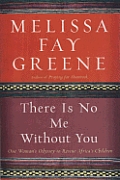
When we lost power for most of the day on Sunday and I spent a lot of that time curled up under a blanket (we had no heat)while the kids veg'ed in front of a movie on the laptop, wearing layers of clothes and cuddling under blankets. (Z-Man jokes that we should always keep the house very cold…it’s the only time the girls get along!) With nothing else to do, I finally had time to just sit and read. I've been meaning to read the highly recommended book, “There Is No Me Without You” by Melissa Fay Greene, for quite a while but haven't had the uninterrupted time to just sit and absorb such a crucial topic.
This is an amazing book and I highly recommend it to anyone interested in the AIDS epidemic in Africa and the plight of the children orphaned by the disease. It follows the story of a middle aged Ethiopian woman as she finds herself in the middle of a life a death struggle to save a few of the estimated 4 million children orphaned in Ethiopia alone. 4 million! That is a staggering number; I can’t even fathom it. Children are raising children. No one feeds them, no one tucks them into bed, and no one makes their lunch and sends them off to school.
In the book the author asks you to imagine that this has happened in your town. That your child comes home from school to an empty house…no parents, they are all gone, dead. No next door neighbors, no aunts and uncles, no grandparents to step in and help. What would they do, where would they go? It’s terrifying. I could suddenly see my children with no one to help them and for the first time, I truly understood the face of this disaster. It came home to me.
The book also lets us peek in and catch glimpses of Ethiopian culture. We learn about their history, their religions, and their customs. We get to see some hope; children saved by newly available AIDS medication, children adopted to foreign homes. We see the few lucky ones who find someone to care for them, about them.
What I really took away from this book is awareness. We, in the western world, have put HIV on the back burner because it no longer affects us. Because we can afford the expensive, life saving drugs that make having HIV into a chronic illness instead of a fatal one, we turn our backs and our minds from those places that can’t.
Every child deserves parents and since adopting 4 million children is not possible, we need to find a way to help save their parents.
Click on the image to go to the website and find out how you can help
Julie over at A Little Pregnant is making an amazing Ethiopian quilt as a raffle fundraiser for a family bringing home their second daughter from Ethiopia. Here's Beth's story in her own words.
Though my husband and I hadn't used birth control since our second anniversary, it wasn't until our 11th year of marriage that we began to suspect that all those tales of getting pregnant after one wild ride in the backseat of a car might not be entirely true. The usual hellish battery of fertility testing pegged us as members of the elite club known as "Cause of Infertility: Unknown." I underwent cycle after cycle of drugs injected in various public places — restaurant restrooms, mall parking lots, coat closets at a class reunion, etc. — and the wild emotions that went along: weeklong bouts of hysterical crying, murderous rage toward dust balls on the floor, and hours of staring blankly into the mirror wondering why I was apparently the only infertile woman in the universe.
Finally, after several cycles of overreacting to the drugs, blowing up like a balloon — seriously, I looked very much like a giant frightened blowfish — and selling nearly everything we owned to pay for the privilege, we reached the summit of Everest and got pregnant. We were overjoyed. Our families thanked God for our blessing. We planned for a nursery and baby clothes and toys. My mom crocheted a wonderfully soft and lovely blanket and bought us a box of books and planners on pregnancy and babies. At Christmastime during the required ultrasound, when we expected to see a tiny body replacing the little blinking heartbeat we’d seen in the last ultrasound, our technician began to cry. Our baby had disappeared. At 10 weeks, she'd just thrown in the towel and gone back from whence she came without so much as a how-do-you-do.
Since the whole thing didn't seem real, we didn’t consider a D&C and it wasn’t strongly suggested. I now know what it feels like to give birth: I did it on the bathroom floor the day after New Year's at 3 in the morning alone. The pain, both physical and emotional, that wracked me that night lives in me even now, and it's far too easy to let it drift to the surface. So instead I'll tell you how my hell turned into a sparkling joyous Heaven.
About 8 months after that torturous night, my husband and I went to an informational meeting at a local adoption agency. They had just begun a program in Ethiopia and it immediately called to us. I feel as if someone was shouting to us that our baby had been born somewhere else. We started the process, decided we’d be open to a "waiting child" (one with mild challenges or treatable defects), and began the wait. The day after New Year's in 2005, we received a picture of a waiting child in Ethiopia, a sad-looking little girl of 3 years. We knew immediately she was ours.
We borrowed and scraped, sold everything again, and flew to Ethiopia in April of that year. We drove up to the children’s home and got out. Right away a tiny body hurled itself across the yard screaming, "Mommy and Daddy!" I can't even think of that moment when our daughter leaped into our arms without crying. She is our gift and our truest blessing. She brings light and joy to the darkest corners. She is special. She is ours and we are hers forever. I never dreamed that such contentment and love and sheer dancing-in-the-sunshine joy was possible, but I am drunk with it every day.
We've also adopted her birth family as a branch of our own and sponsored her little sister (about 19 months old now) to ensure her health and well-being hoping that we could always know where she was for our daughter. Her family loves our daughter with all their hearts.
In March of this year we received a letter from our daughter's beloved grandmother asking us to take her other granddaughter, our daughter's sister. Life expectancy in Ethiopia is tragically only 59 years, and as she has been seriously ill and cannot afford to feed even herself despite the funds we send, she knows that she is nearing the end of her life. She explained that she knew from the stacks of photos we sent that her older granddaughter is happy and loved, and she wanted that for her baby granddaughter as well. How could we refuse?
After weeks of soul-searching and consideration of just how far into debt we could go and still see the light of day, we decided to just go for it. Yet again, we’ve sold everything we can and worked double time to afford it, and I hope to travel next month (October) to bring our little daughter home to her sister. We're in love with our baby already
I know that a lot of you out there are adoptive parents or like us are in the process so I know you don't have a lot of cash just laying around, but if you have just five dollars, it'd make a difference for this family and their daughters. If you can, head on over and take a sneak peek at what promises to be an amazing quilt, and enter the raffle to help this family bring their sweet little one home.
The weather has been so nice here the last few days that I've been out playing instead of being a good blogger. I'm about to run out to the park with the kids for the third time today. To hold you over until it starts raining again and I have more time to write, here is a great video all about Ethiopia I found on YouTube.




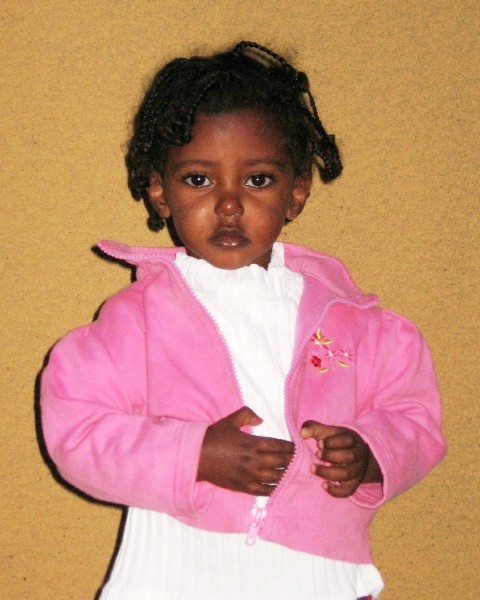
 Referral Picture 6/21/07